

How to optimize EComposer page loading speed
Is your page loading slower than you’d like? Page speed depends on many things: the images, videos and text you add, plus any third-party scripts running in the background. The pre-made templates in our library are already optimized as much as we can, so if you import one and use it as it is, you most likely won’t notice a speed problem. The tips below help you keep your own pages fast as you customize them.
We’re sorry, but we can’t optimize the loading speed of a page that has been heavily modified. It’s quite complicated and takes a very long time. Think of it like food: the more you eat, the more weight you gain. In the same way, every piece of content you add makes the page bigger, so it needs more time to load.
1. Check your page with Google PageSpeed Insights
Before you change anything, it helps to know what is actually slowing your page down. Open Google PageSpeed Insights, paste in your page URL and run the test. The report shows the causes of a low score and what to do about them, so you can follow its suggestions yourself or share the report with a page speed optimization professional.
2. Reduce the page size
The lighter a page is, the faster it loads. These four habits make the biggest difference.
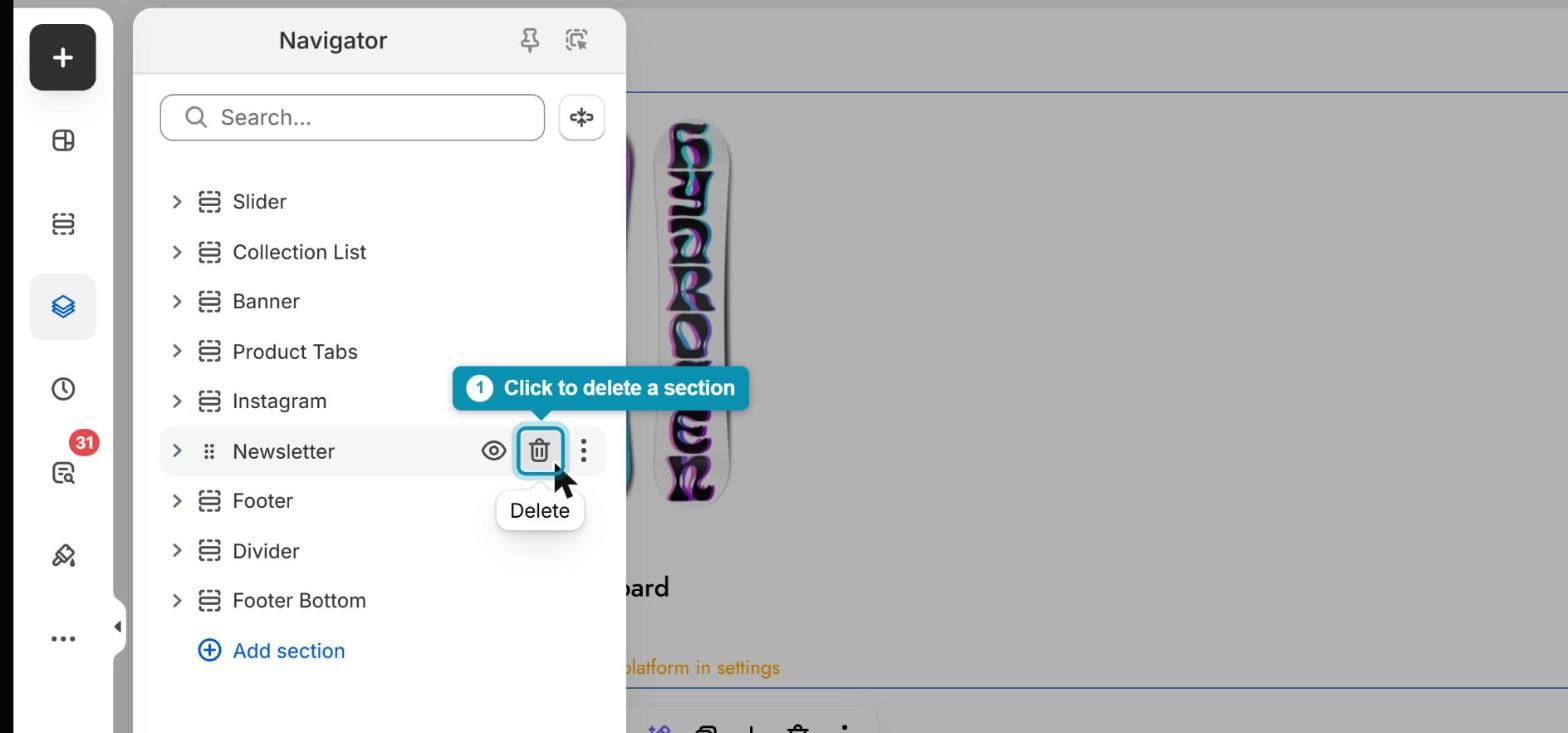
Remove what you don’t need. The less content a page has, the lighter it is, so consider deleting sections you can live without and swapping out heavy images. The quickest way is the Navigator: open it from the left toolbar (or press Ctrl + Shift + U), hover over a section you don’t need and click its Delete icon.
Compress your images. Compress them before you upload, or compress the images already on your page with the Tinify Image Compressor extension.
Use the right image size. Match the image resolution to the space it fills. For example, if a section is 600 x 600px, upload an image of about the same size so it fits the frame. If you place a 2000 x 3000px image in that same frame, the browser still has to download the whole file, so the page takes longer to load, and PageSpeed Insights will flag it as an image size issue. Not sure which size to use? See What is the recommended image size on an EComposer page?
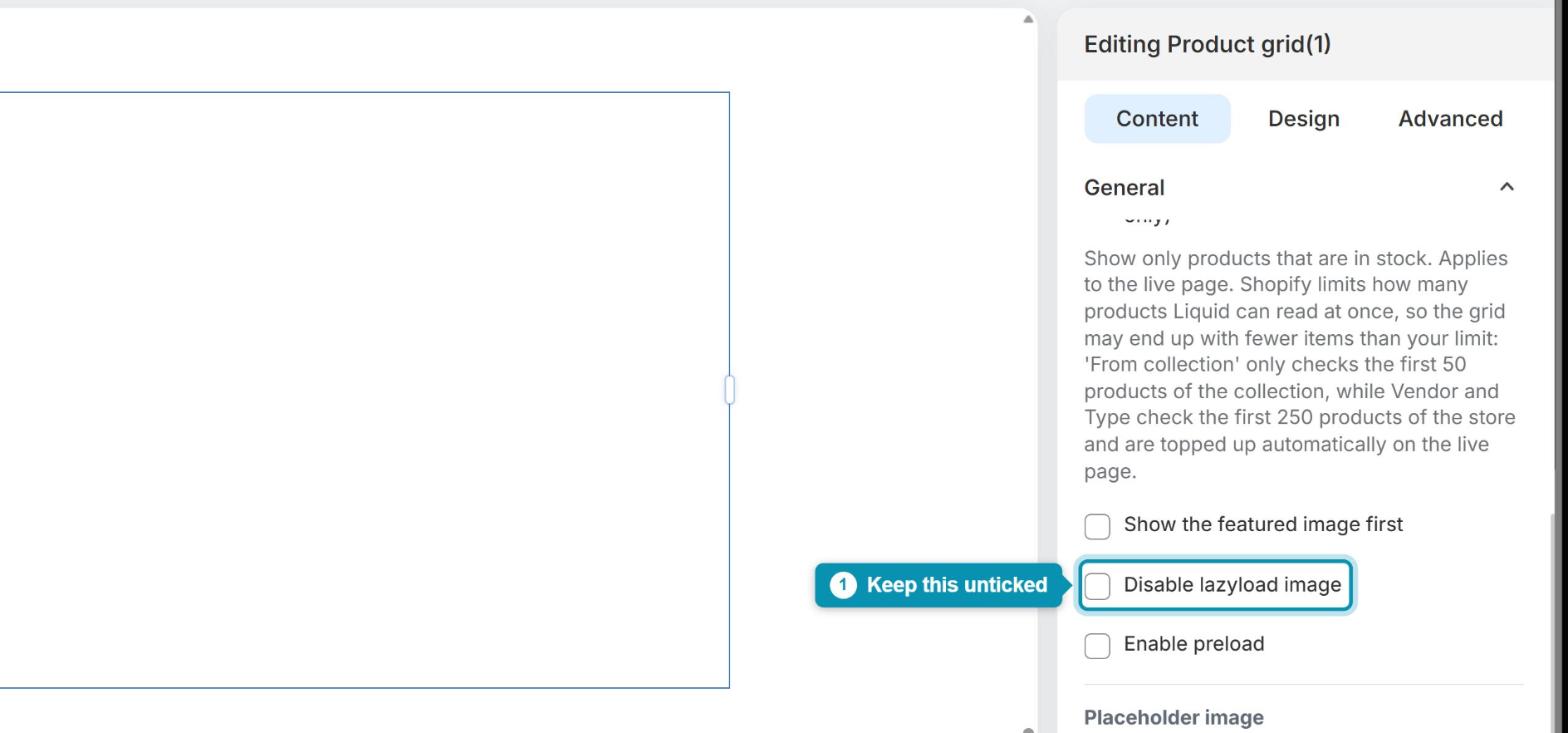
Keep lazy loading on. Lazy loading makes images load only when visitors scroll down to them, which keeps the first load light. It is on by default, and the Disable lazyload image option in a Product Grid’s General group forces every image to download immediately, so leave it unticked unless you have a specific reason to turn it off. Elements such as Banner and Simple Slider have a similar Disable lazyload option.
3. Build the page in a proper way
How you choose and arrange elements matters as much as what you put in them. Keep these points in mind while you build:
Don’t start the page with a Slider if you only have one image. An Image or Banner element is a much simpler alternative.
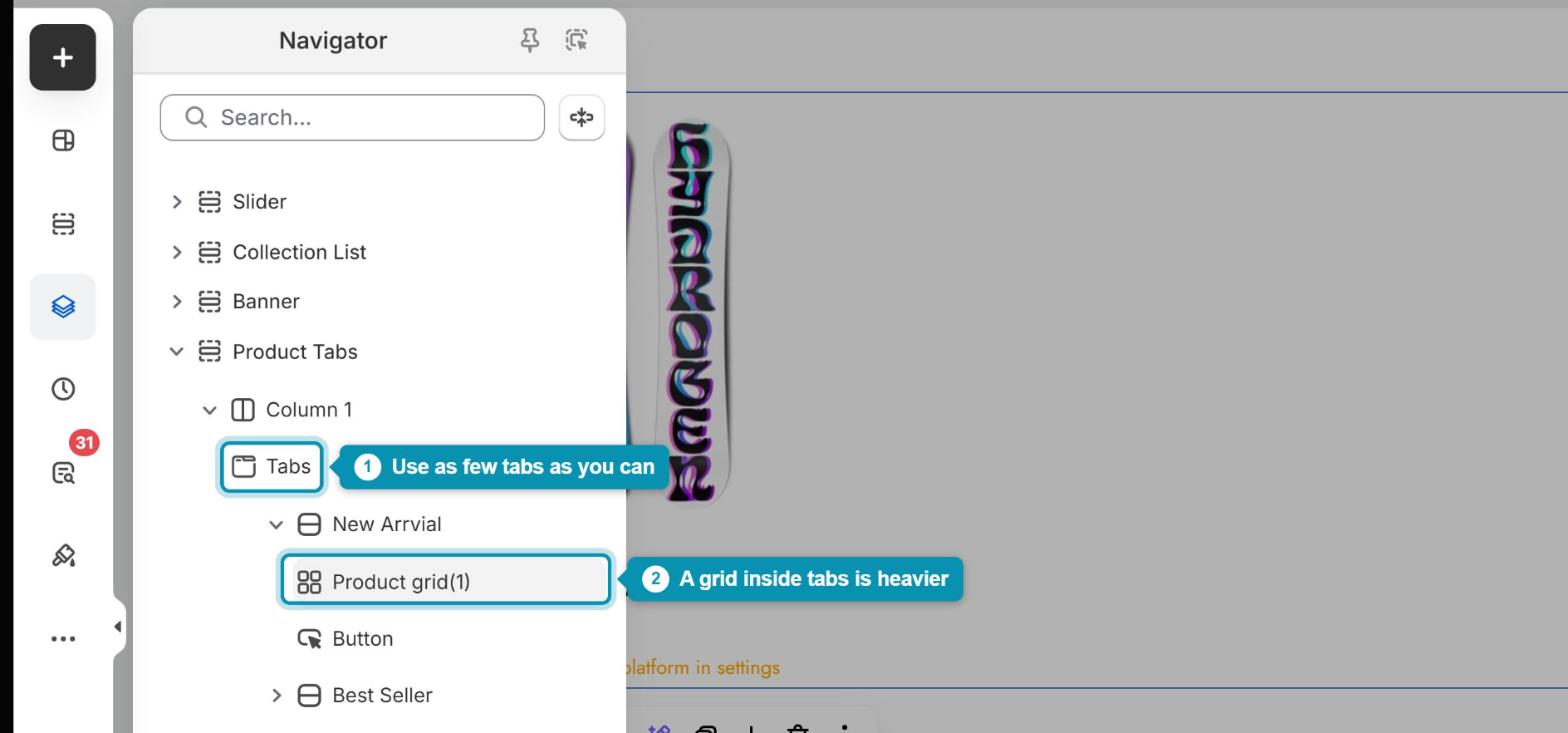
Don’t use too many heavy elements. Product Grid, Product Box, Tabs and Testimonials are some of the largest elements and use big chunks of code, so avoid stacking many of them on one page.
Keep tabs to a minimum. Putting a Product Grid inside a Tabs element makes the page even heavier, so use as few tabs as you can.
Use only 3–4 Product Box elements per page. If you want to show more products than that, use a Product Grid element instead.
Go easy on Metafields. The Metafields element calls dynamic data from Shopify admin, which takes longer to load than fixed content.




2 Comments
Bhavesh gajipara
Please help me my store speed improvement
Linh Thuy
Hi dear,
Store loading speed can be affected by several factors, such as your theme, installed apps, and page content like images and products.
While we have optimized performance on our side, we recommend reviewing these points. Reducing heavy apps, and adjusting your page layout can greatly improve speed.
If you have any questions or need support, feel free to contact us via live chat.
Thank you!